
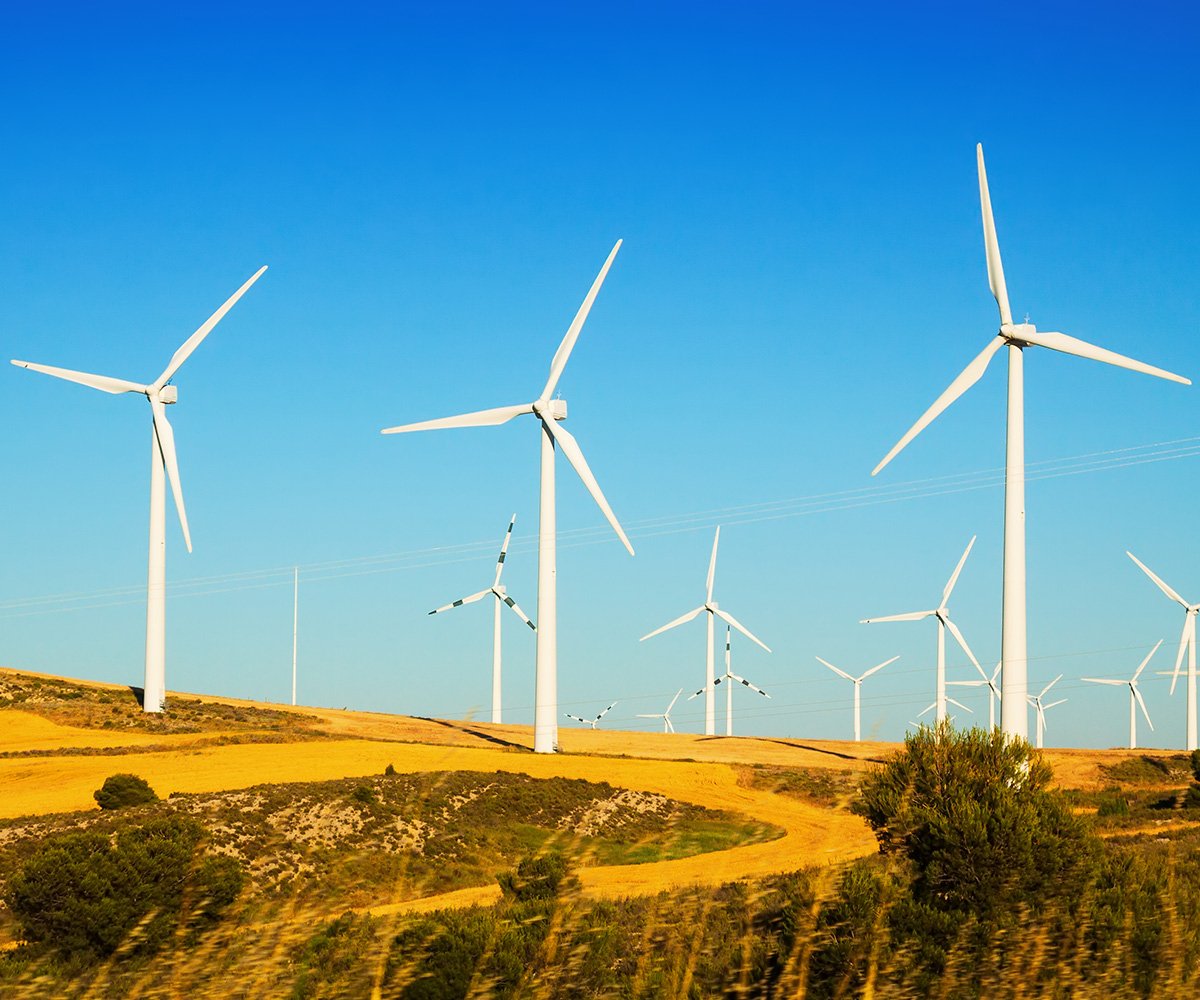
Pakistan is constantly moving towards a green direction. In recent years, Pakistan has prioritized green development and accelerated the transformation of its energy structure. It is expected that by the end of 2025, the cumulative installed capacity of solar power in Pakistan will reach 5 gigawatts, and the installed capacity of other clean energy sources such as wind power will also be further increased.
From desert photovoltaic matrices to deep-sea wind power clusters, from “Chinese chips” for nuclear power plants to “Chinese solutions” for energy storage technology, Chinese companies have provided the driving force for Pakistan’s transformation. China Pakistan green cooperation not only continues to promote Pakistan’s energy transformation process, but also provides an “Eastern solution” for promoting global climate governance.
Green energy becomes popular in industry and commerce
Afya Malik, Senior Research Economist at the Pakistan Institute of Development Economics, stated that by 2024, Pakistan will achieve a significant increase in solar energy installed capacity. As of the end of 2024, the cumulative installed capacity of solar power in Pakistan has reached 4.1 gigawatts. It should be noted that as of the end of June 2023, the cumulative installed capacity of solar power in Pakistan is only 1.3 gigawatts, with astonishing growth in a short period of time. Nowadays, solar energy has benefited 283000 consumers in Pakistan’s commercial, industrial, and agricultural sectors
Foreign media “Eurasian Perspective” believes that Pakistan’s energy sector is moving towards a more proactive track, and energy revitalization has become the cornerstone of Pakistan’s economic recovery and sustainable development. In recent years, Pakistan has been promoting energy substitution and hoping to improve its energy security level. It is understood that Pakistan’s energy strategy focuses on diversifying its energy structure through the development of renewable energy. The Pakistani government has released many favorable policies, laying a solid foundation for building a more resilient and self reliant energy infrastructure.
Afiya Malik stated that in 2024, the downstream demand for solar energy in Pakistan will surge, and 13 GW of photovoltaic modules will be imported from China; At the same time, the scale of off grid solar power plants has also significantly increased. It is worth noting that the solar energy industry in Pakistan is developing rapidly, and more and more companies are showing the idea of investing in solar power plants, hoping to reduce electricity costs and maintain reliable power supply by using solar power. So far, Pakistan’s industrial and commercial sector has installed solar power plants of over 3 gigawatts, contributing the majority of its total installed capacity nationwide.
Cost reduction drives new demand
Afiya Malik believes that the rapid emergence of solar power demand in Pakistan is mainly affected by the rise in grid electricity prices and the decline in photovoltaic product prices.
In 2024, the installation cost of solar power systems in Pakistan has significantly decreased, and this year it continues to maintain a downward trend. As of now, the average installation cost of solar power systems in Pakistan has decreased by 20% compared to last year, and the prices of small solar power systems ranging from 5 kW to 15 kW have been reduced to varying degrees compared to last year.
Meanwhile, as solar panel prices continue to decline, many consumers in Pakistan are now considering installing solar power generation systems, making them a more viable alternative to expensive grid electricity. The decrease in prices of solar power generation products has made renewable energy affordable for the Pakistani people.
Energy expert Gufari Ahmed said that the development of the renewable energy industry will help the Pakistani people obtain reliable and economical energy from a green perspective, improve infrastructure, and enhance their quality of life. At the same time, it can also promote community development, drive industrial economic development and technological innovation. In addition, investment in the renewable energy industry is expected to create more job opportunities.
Afiya Malik predicts that as the demand for solar power continues to emerge, the development of Pakistan’s energy storage market will also enter a fast lane in the future. The relationship between energy storage and solar power generation will become increasingly close, playing an important role in continuously driving down the cost of solar power generation. Whether it is off grid or grid connected, the development of solar power generation can also help remote areas obtain electricity and promote regional development.
Take multiple measures to promote industrial development
According to Pakistan’s latest nationally determined contribution plan, the country plans to increase the proportion of renewable energy generation to 60% by 2030, while achieving the goal of reducing greenhouse gas emissions by 50% compared to the baseline. This emission reduction commitment has increased by over 15 percentage points compared to the 2016 version, and is seen as a significant breakthrough for South Asian countries in addressing climate change.
Centralized solar power plants occupy a large area and have a large installed capacity per unit, while distributed solar power plants occupy a small area and have a small installed capacity per unit. To effectively promote the development of Pakistan’s solar energy industry and energy substitution, centralization is also essential. In this context, Pakistan has launched a large-scale auction of renewable energy generation projects, including a 150 MW solar power project in the southwestern Balochistan province of Pakistan.
Afia Malik introduced that these auction projects are led by Pakistani utility company K-Electric, which also conducted auctions for 220 MW solar and wind power joint projects, attracting global companies to participate. It is expected that under the dual promotion of distributed solar power generation and centralized solar power generation, the installed capacity of solar power generation in Pakistan will further increase this year and next year. The installed capacity of grid connected distributed solar power generation will reach 6 gigawatts, and the growth rate of off grid distributed solar power generation and centralized solar power generation will also maintain a high level.
According to data from the Ministry of Planning and Development of Pakistan, by 2030, the clean energy industry in Pakistan will create over 500000 job opportunities and drive investment in the related industry chain exceeding 20 billion US dollars.
China Pakistan energy cooperation becomes a model
The thriving market has attracted increasing investment interest from related companies in Pakistan. The latest report from the World Bank indicates that Pakistan has received $830 million in funding support through the International Climate Financing Mechanism for the construction of the Sindh Wind Power Corridor and the Cape Province Hydroelectric Cluster.
The international cooperation model has become a key way for Pakistan to promote energy transformation.
As a country jointly building the “the Belt and Road”, Pakistan relies on the China Pakistan Economic Corridor to establish a cross-border carbon sink trading platform, introduces Chinese PV leading enterprises to build industrial parks, drives the development of the local new energy equipment manufacturing industry chain, and creates more than 200000 green jobs.
On the vast Gobi Desert in Balochistan Province, the 1000 MW Quetta Solar Park built under the framework of the China Pakistan Economic Corridor has been connected to the grid for power generation, covering an area equivalent to 1400 standard football fields and reducing carbon emissions by 1.3 million tons annually. In the coastal areas of Sindh province, wind power projects with a total installed capacity of 2000 megawatts are being vigorously promoted, and it is expected to provide green electricity to 500000 households after completion by 2025.
To achieve the blueprint of green development, the Pakistani government has taken multiple measures to build a clean energy system. At present, clean energy projects represented by the Karot Hydropower Station and Jinnah Photovoltaic Park under the framework of the China Pakistan Economic Corridor have begun to provide green electricity to Pakistan, and it is expected that the installed capacity of wind and solar power will further increase in the future. (Reporter Dong Zitong)